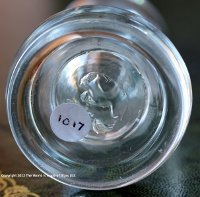
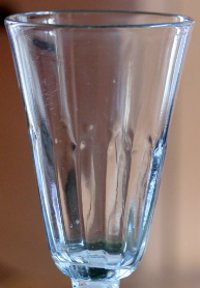
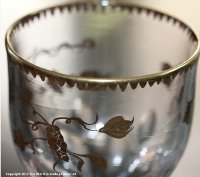
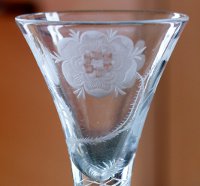
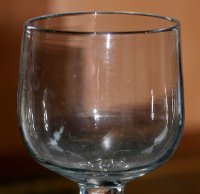
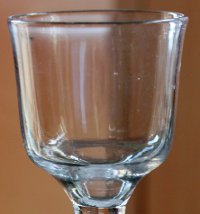
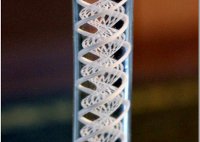
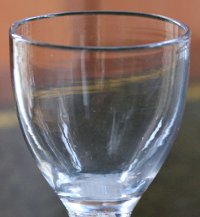
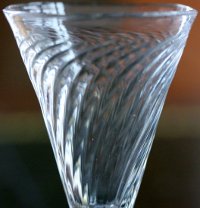
As with all specialist subjects, the cogniscenti tend to develop their own language, and the collecting of eighteenth century glass is no different. We have tried here to provide a pictorial glossary of terms used in defining and describing Georgian glass. Let us know if you hear of a term which we haven’t detailed, or if you believe the definition could be improved.
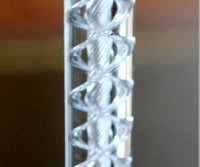
Air twist – a twist in a stem created by inserting air bubbles into the gather of glass, sealing in the bubbles with more glass and then extending it while twisting it to produce one or more twists of air
Angular knop – a swelling on a stem with a shape of a diamond
Annular knop – a swelling on a stem with a shape of one or more rings
Ball knop – a swelling on a stem with a shape of a ball
Beilby – normally referring to the Beilby siblings who enameled glass from an atelier in Newcastle
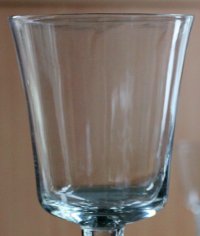
Bell bowl – a bowl type with a shape similar to an inverted bell
Bucket bowl – a bowl type with straight sides and a flattened base
Colour twist – a twist in a stem incorporating an opaque twist of a colour other than white
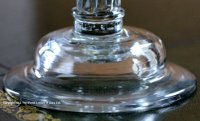
Conical foot – a foot that rises evenly to the middle in a cone shape
Cushion knop – a swelling on a stem with a shape of a squashed ball
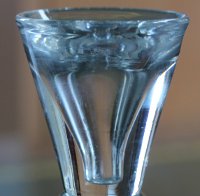
Deceptive bowl – a bowl type thickened to the base to hold a deceptively small amount of liquid
Domed foot – a two level foot, flat at the edge, rising to a dome in the middle
Double ogee bowl – a bowl type with an outline almost in the shape of an S
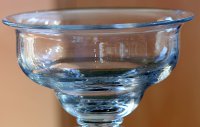
Everted rim – a feature of a bowl where the lip is everted i.e. turns outwards
Extended rounded funnel bowl – a bowl type where the funnel bowl is much longer than in a wine glass, e.g. as in an ale glass, and is then rounded where the bowl meets the stem
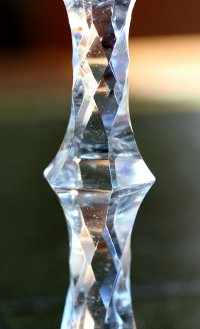
Facet stem – a stem type popular towards the end of the 18th century where the stem was cut with diamonds or hexagonal shapes to better reflect the candlelight
Firing foot – a thick foot designed for slamming down on a table after a toast
Flange foot – where the thick edge of the firing foot has been extended downwards
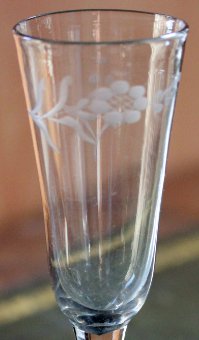
Flutes – a long, usually rounded groove incised into the glass
Folded foot – where the edge of the foot has been folded back under itself
Gilding – the process of applying gold leaf or gold paint to a glass
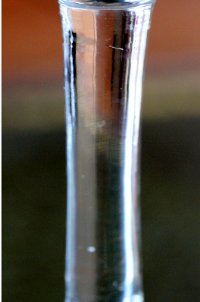
Hollow stem – a stem type introduced after the Excise Act of 1745 put a tax on glasses based on weight. The plain stem would have a hollow centre.
Inverted baluster knop – a swelling on a stem in the shape of a ball gradually declining in width as it descends the stem
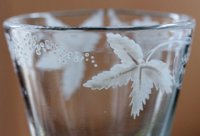
Jacobite – relating to those who supported James II and his son Charles (Bonny Prince Charlie) in their claim to the throne of Britain in the early 18th century, The six petaled rose was one of the symbols used by his supporters.
Mead glass – a glass having a bowl type of a certain shape thought to have been used for drinking mead
Ogee bowl – a bowl type of straight sides which then narrows to a funnel shape
Opaque twist – a twist in a stem created by using opaque enamel canes, usually white, in conjunction with clear glass and then extending the result while twisting it
Ovoid bowl – a bowl type of oval form
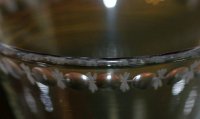
OXO engraved – a style of engraving often found on bowl rims dating from the neoclassical period at the end of the 18th century
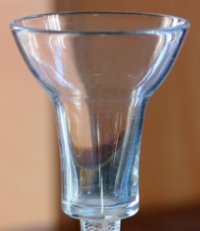
Pan top – a bowl type which flares out markedly towards the rim
Pedestal stem/Silesian stem – a stem type produced in a mould with four, six or eight sides, sometimes given a twist
Plain stem – an undecorated stem
Rounded funnel – a bowl type of funnel shape which becomes rounded towards the bottom where the bowl meets the stem
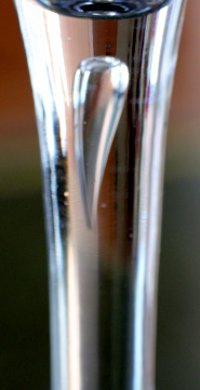
Tear – where a bubble of air has been introduced to a glass and has taken the shape of a tear when extruded
Terraced foot – where the firing foot is built up in layers or terraces
Vermicular collar – an applied coil of glass surrounding a stem in the shape of a worm
Waisted bucket – a bowl type where the normal straight sided bucket shape is made slightly concave
Wrythen – Simple decoration where external parallel grooves or ribs are given a twist during blowing to create a spiral pattern